Product UI/UX design
Dashboards, admin panels, and onboarding flows drawn around the jobs your users repeat.
Product UI, frontend, backend, and deployment — dashboards and admin panels that are configurable, not a reskinned template.
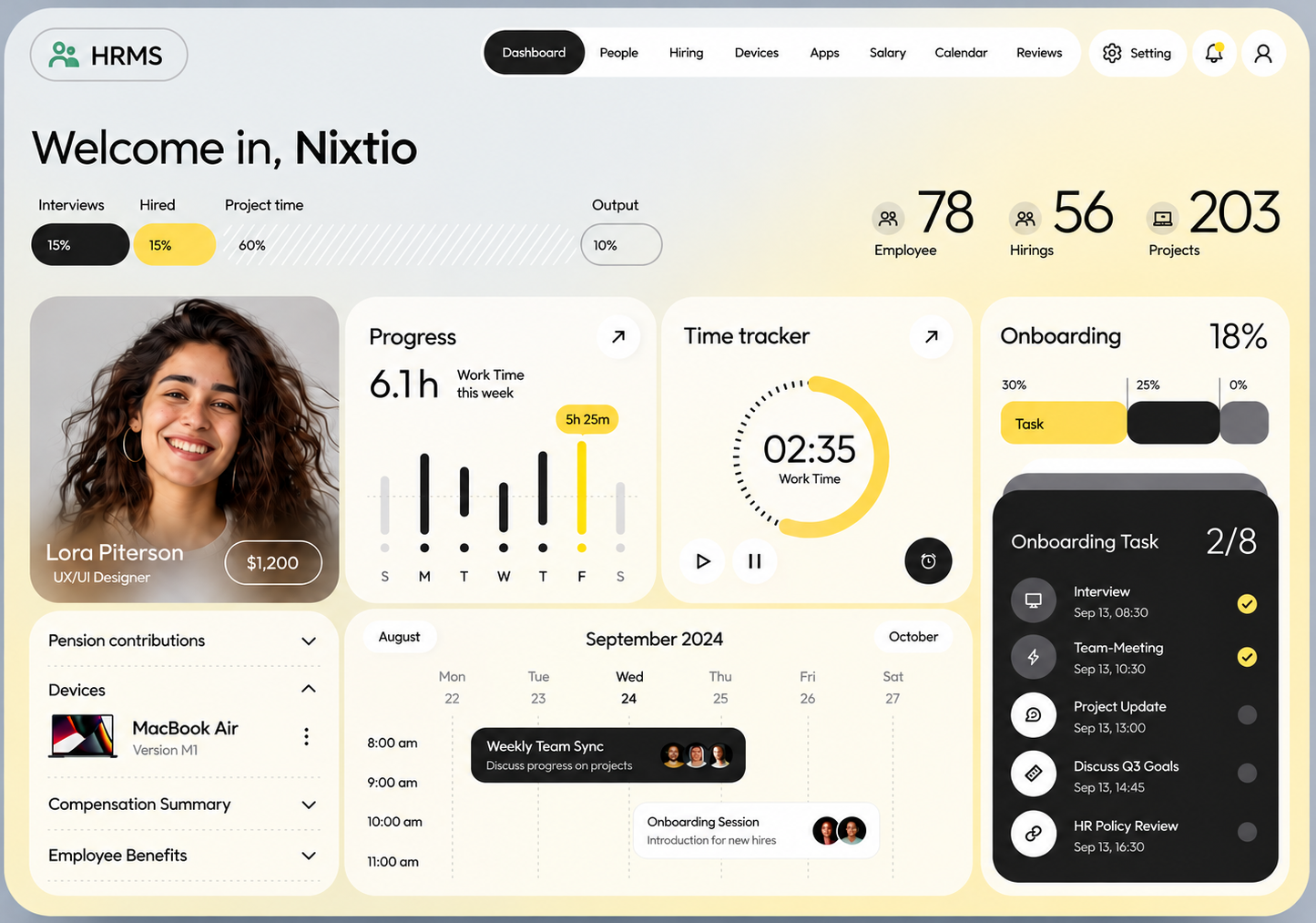
Hiring, onboarding, time, and payroll in one workspace your ops team can actually run.
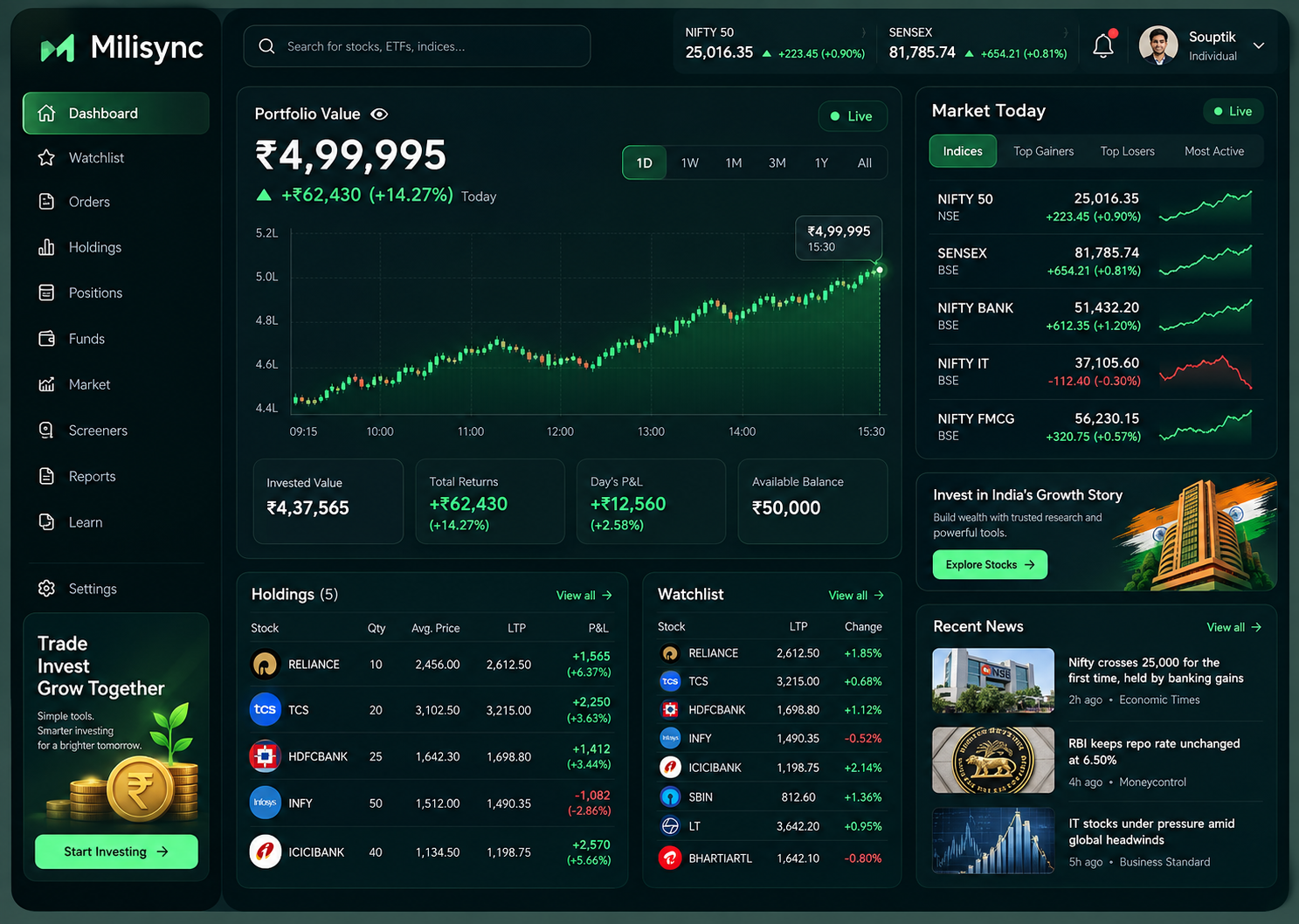
Balances, markets, and risk tools with the density a trading product needs.
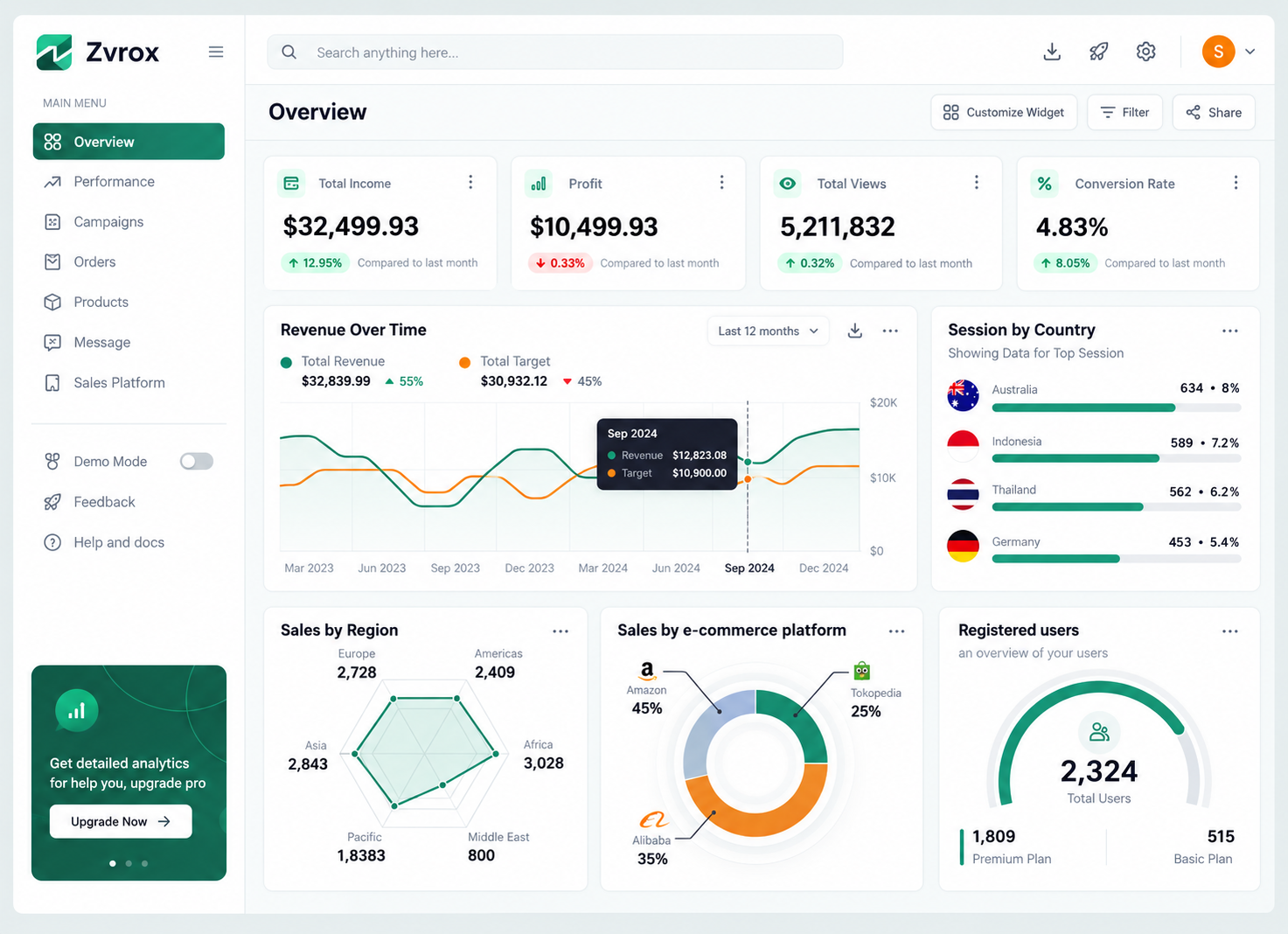
Revenue, conversion, and regional performance — the overview a founder opens every morning.
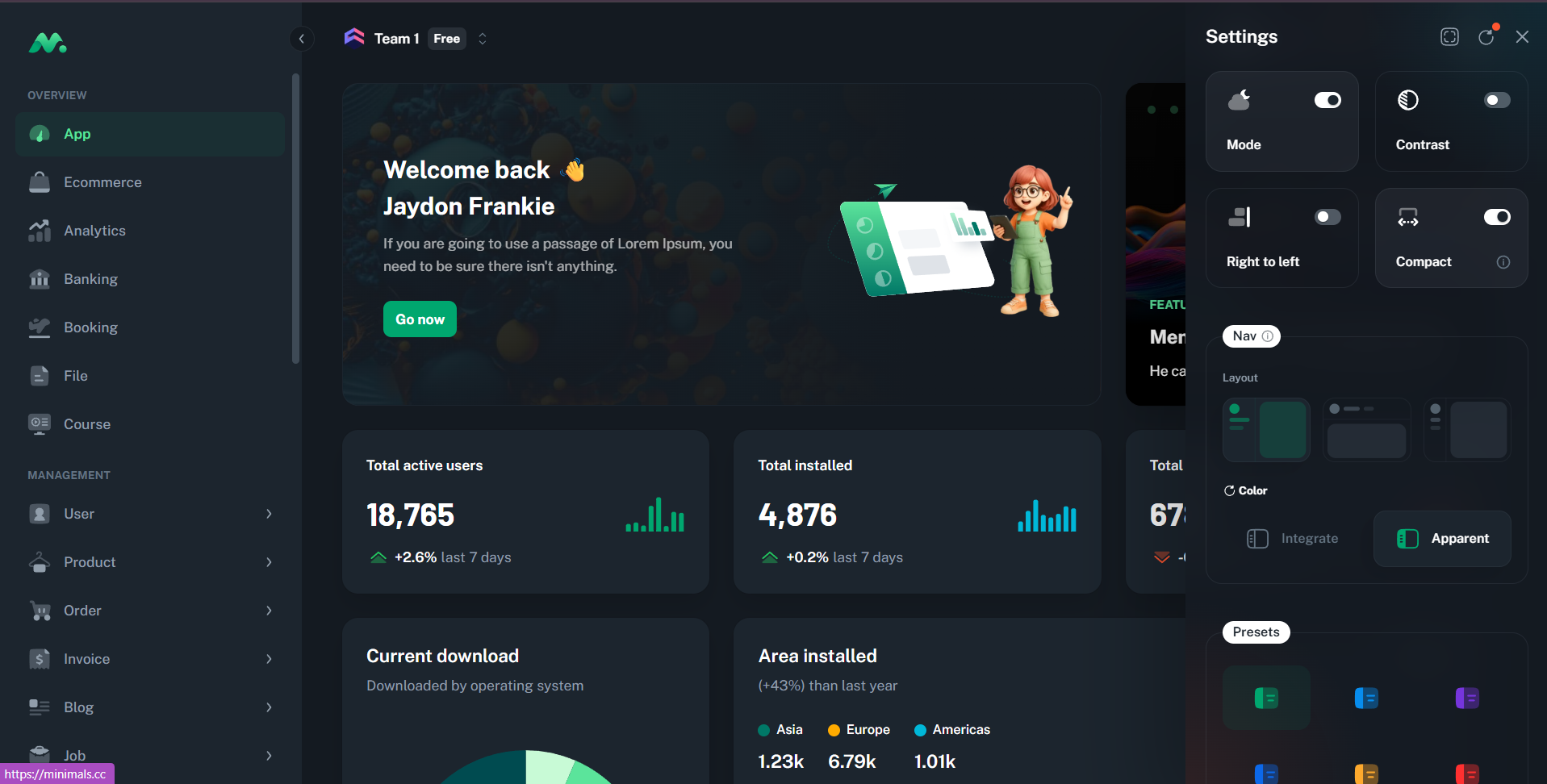
One navigation, many modules — ecommerce, booking, files, and billing behind a single login.
Seven pieces of a SaaS build. We take the ones your team does not already own, and leave the rest documented.
Dashboards, admin panels, and onboarding flows drawn around the jobs your users repeat.
React and Next.js, driven by a design system so screens stay consistent as the product grows.
Services, data models, and APIs the interface can trust — not a mock that expires at launch.
Organisations, roles, and isolation from the first release, not bolted on after the first customer.
Tokens for color, type, density, and layout so a rebrand is a setting, not a rewrite.
Subscriptions, seats, and metered usage wired into the plans you actually sell.
A production path — previews, observability, and a release you can roll back.
Mode, direction, density, navigation, color, and type all update the live chrome. The workspace stays a loading state on purpose — the point is the system around it.
Onboarding
11 days → 2
A people platform whose first-week checklist used to live in three tools. New hires now finish it inside the product.
Time to v1
9 weeks
A multi-tenant admin with auth, billing, and the first two modules — shipped with a hand-over the client’s engineer still runs.
Support load
−34%
Usage and plan state surfaced in the same screen support already had open, so fewer tickets asked “what plan is this account on?”
Founders come to us when the dashboard has to be real: tenants, billing, and a design system that survives the second release.
The people who draw the dashboard also ship the API it calls. There is no hand-off where the theme tokens get lost.
Mode, layout, type, and color are settings in the product, not a follow-up project after launch.
People platforms, trading desks, analytics, and admin shells — the same delivery, different jobs to be done.
Repos, runbooks, and a walkthrough. Your engineer should be able to ship the next module without us in the room.
Both, when you want both. The interface, the API, auth, and the data model can be one engagement. If you already have a backend, we build against it and say so in the scope.
If the product is sold to organisations, yes. Tenants, roles, and data isolation are part of the first architecture, not a migration after the second customer.
You will leave knowing what we would design first, what has to be multi-tenant, and what we would not build.
Predictive models, NLP, computer vision, and intelligent automation built around your data.
Conversational agents that handle real work — support automation, knowledge assistants, sales bots, and workflow agents wired into your stack.
Responsive, user-friendly, SEO-optimized websites that enhance your brand's online presence and drive growth.